
While you're watching the World Cup, the feds may be watching you
When the World Cup Hits U.S. Soil, Federal Surveillance Steps In
The United States is gearing up for the 2026 World Cup and the America250 celebrations with a new wave of drones, facial-recognition cameras, and AI-driven analytics. Spectators and residents alike should expect tighter security checks and longer data retention, raising fresh privacy questions.
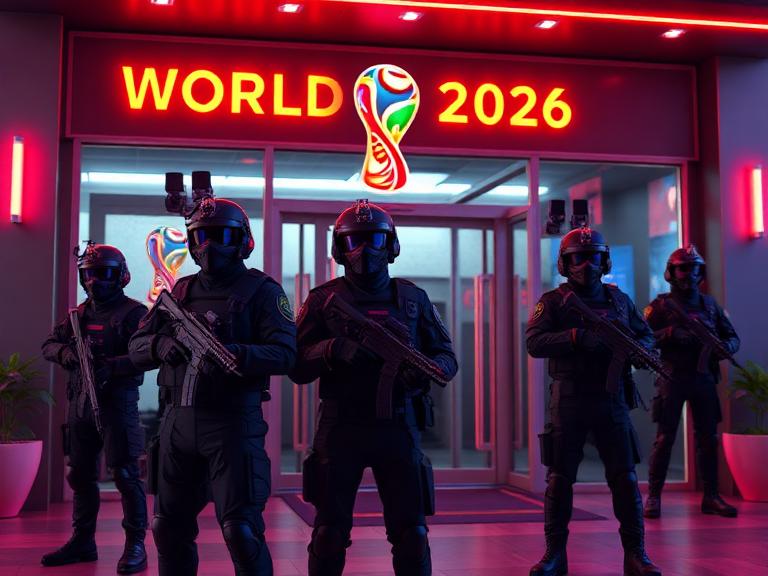
A New Kind of Watchful Eye
As the 2026 World Cup rolls into American cities, federal agencies are deploying a suite of surveillance tools that go beyond the usual security checkpoints. High-altitude drones, fixed-position cameras equipped with facial-recognition software, and AI platforms designed to sift threat signals from crowd noise will be on the ground in Kansas City, Dallas, and other host venues. The rollout coincides with the semiquincentennial-America250-marking 250 years of U.S. history, and officials say the technology is intended to protect both the event and the surrounding communities.
Why This Matters Now
For readers who follow technology, policy, and civil liberties, the timing is crucial. The convergence of a global sporting spectacle with a major national anniversary creates a perfect test case for how far the government will go in monitoring public gatherings. The move also signals a shift toward more automated, data-heavy security strategies that could become the norm for future large-scale events.
What the Reporting Reveals
Recent coverage from multiple outlets confirms that the surveillance effort is not a one-off experiment. Federal agencies-including the Department of Homeland Security, the FBI, and local law-enforcement partners-have signed memoranda of understanding that outline data-sharing protocols and retention periods. Key points emerging from the reporting:
Scope: Drones will patrol stadium perimeters, while fixed cameras will monitor entrances, exits, and crowd flow inside venues.
Technology: Facial-recognition algorithms will be paired with AI analytics to flag individuals who match watch-lists, but the systems are still being calibrated to reduce false positives.
Data Policy: Collected footage is slated for retention up to 90 days, after which it will be reviewed for relevance before deletion.
Oversight: Civil-rights groups have been invited to observe the deployment, though critics argue that transparency measures remain insufficient.
The Bigger Editorial Lens
The story transcends a simple tech update; it illustrates a broader trend toward pervasive surveillance in public spaces. By examining how the government justifies these tools-citing crowd safety, terrorism prevention, and the protection of national heritage-we can better understand the balance (or imbalance) between security and privacy.
What to Watch Next
The next wave of information should focus on concrete outcomes:
1. Official Statements: Look for detailed briefings from DHS and the FBI that clarify the exact capabilities of the deployed systems.
2. Independent Audits: Reports from privacy watchdogs or academic researchers that assess accuracy, bias, and compliance with existing laws.
3. Legal Challenges: Any lawsuits or legislative proposals that arise in response to the surveillance rollout.
These signals will determine whether the current approach is a temporary measure for the World Cup or a template for future events.
Bottom Line
Federal surveillance is set to become a visible part of the 2026 World Cup experience, blending cutting-edge technology with longstanding security concerns. While the intent is to keep fans safe, the expanded use of drones and facial-recognition cameras raises important questions about data retention, oversight, and the long-term implications for civil liberties. Readers should stay tuned for official clarifications and independent analyses that will shape the conversation moving forward.
The article explains how U.S. federal agencies will use drones, facial-recognition cameras, and AI analytics to monitor crowds during the 2026 World Cup and America250 celebrations, outlining the technology, data policies, and privacy concerns.
- Federal agencies are deploying drones and facial-recognition cameras for the 2026 World Cup.
- AI analytics will be used to filter potential threats from normal crowd activity.
- Spectators can expect more thorough entry screening and longer video retention periods.
- The surveillance rollout may set a precedent for security measures at future large-scale events.
Article visuals are generated or attached through the site image pipeline and rendered only when image assets are available for this post.